


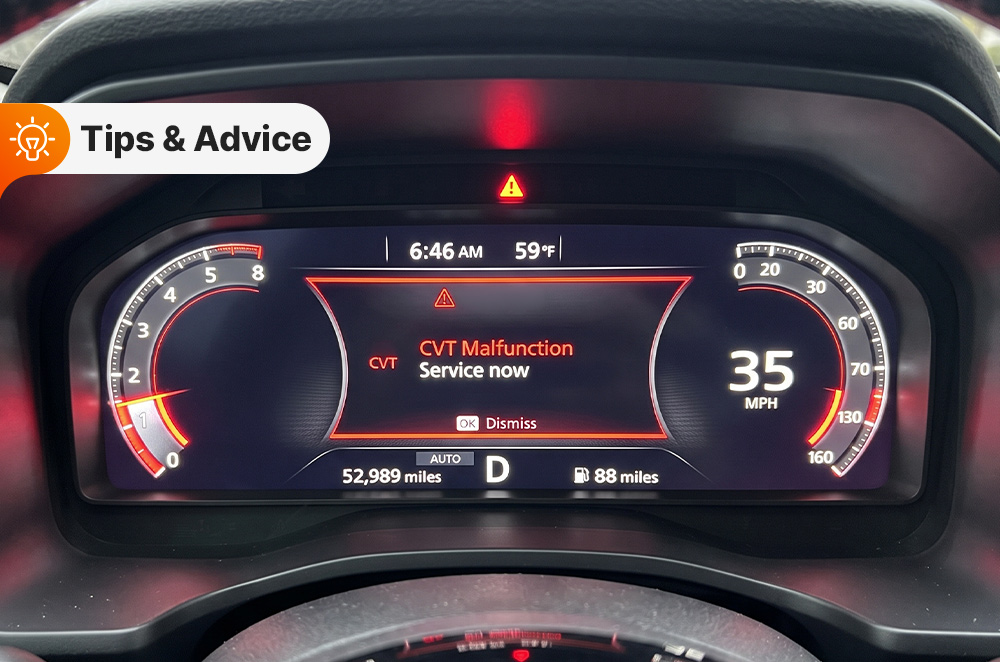
Nobody wants to learn their transmission is failing from the seat of a tow truck. It’s common to see these types of transmissions on your everyday economy car. If you haven’t driven one, you probably rode in a car that has one. Like any other transmission, it needs care, attention, and the proper way of operating it for it to last long. Ignore periodic maintenance on it and it will bite you in the future in the form of a very expensive repair. The good news is that a struggling CVT rarely goes down without a fight. It hesitates, whines, and flashes lights well before it quits, and catching those hints early can be the difference between a simple fluid service and a repair bill that can easily reach six digits. Here's what to look, listen, and feel for if you suspect your car’s CVT is dying.
What makes a CVT different from the traditional automatic?
A traditional automatic transmission uses a set of planetary gears and a torque converter to switch between a fixed number of gear ratios. Think six, eight, or even ten speeds, with each one clicking into place as you pick up speed. You can feel those shifts, and that familiar little lurch is part of the automatic experience.
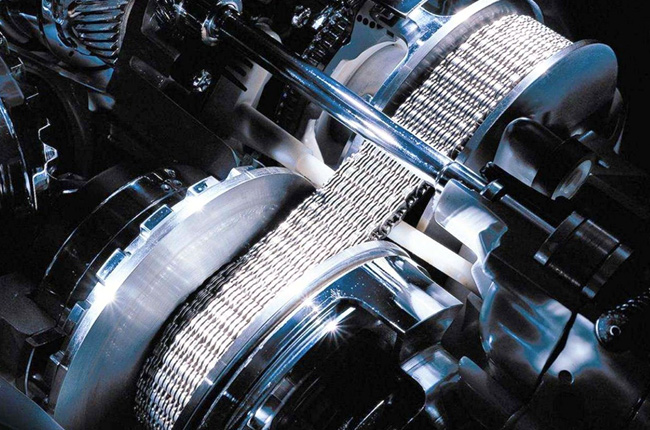
A CVT doesn’t have gears. Instead, it uses two cone-shaped pulleys connected by a strong steel belt or chain. Each pulley is made of two halves that slide toward or away from each other, which makes the belt ride higher or lower on the cone. Change the effective size of those pulleys, and you change the ratio, smoothly and without any distinct steps. The engine can stay at its most efficient speed while the car glides through every ratio in between. That's why a CVT feels so smooth, and why it can squeeze out better mileage than the conventional automatics.
The tradeoff is that the belt and pulleys live under a lot of pressure and heat, and they depend heavily on clean, correct fluid. When something starts to wear, it affects everything in the system.
What to watch out for
Strange whining or humming
Every car makes some noise, but a healthy CVT is usually pretty quiet. If you start hearing a whine or hum that rises and falls with your speed, pay attention. Worn bearings, damaged pulley surfaces, a tired belt, or fluid that's past its prime can all cause it. Low fluid is a common culprit, since the pump has to work harder and the moving parts lose lubrication.
One quick clarification before you panic. Many CVTs hold the engine at a steady, higher RPM while you accelerate, which creates a dull droning sound. That's normal behavior coming from the engine and not a sign of trouble. The noise to worry about is a mechanical whine, a grinding, or a buzz that wasn't there before.
Your car struggles to accelerate
Imagine this: you just got done filling up, and you’re ready to rejoin the expressway. You hit the gas to keep up with traffic, but nothing happens. That lag is one of the earliest complaints people report with a worn CVT. It can come from low or degraded fluid, a belt that's starting to lose its grip, or sticky valves and solenoids that control how the pulleys move. While CVTs have a characteristic of being less eager than torque converter automatics, they should still respond quickly and predictably, so a noticeable delay is worth taking seriously.
Running hot
Heat is the number one enemy of any transmission, and CVTs are especially sensitive to it. Hot fluid breaks down faster, and once it loses its ability to lubricate and cool, wear speeds up fast. Many vehicles will respond to high temperatures by cutting power or entering a limp mode to protect themselves, which can feel like the car suddenly lost its energy on a long hill or while towing. You might also notice a burnt smell. If your car keeps running hot, the cause could be old fluid, a clogged cooler, or internal friction from worn parts.
It feels like it's slipping
This is the classic sign. You step on the accelerator, the engine revs up, but the car doesn't pick up speed the way it should. That's slipping, and in a CVT, it often means the belt or chain isn't gripping the pulleys properly. It can happen from worn belts, low fluid pressure, or contaminated fluid. Slipping tends to get worse over time, not better, so it's one of the clearest signals that a visit to a shop is overdue.

RPMs are all over the place
If the tachometer jumps around, surges, or feels like it's hunting for the right ratio without any change in your foot, something's off. Some drivers also feel a shudder or vibration at low speeds, especially when pulling away from a stop. A healthy CVT should feel seamless, so surging or shuddering suggests the system can't hold its ratio smoothly. Sticking solenoids, worn belts, and fluid problems are all common explanations.

The dashboard lights up
Sometimes the car just tells you directly. A check engine light is the most common warning, and the transmission control module can trigger it when it spots something off with ratios, pressure, or temperature. Some vehicles also have a dedicated warning just for the transmission. A cheap OBD-II scanner or a quick visit to a shop can pull the stored trouble codes and point you toward the actual problem.

What to do next
The single best thing you can do for a CVT is take care of its fluid. These transmissions need a fluid made specifically for CVTs, and using the wrong kind can do more harm than good. Service intervals vary a lot between manufacturers, but your owner's manual will always have the final word. Many mechanics' advice leans toward more frequent changes, especially if you tow, drive in stop-and-go traffic, or live somewhere hot, like the Philippines.
If you're already noticing symptoms, get the car checked sooner rather than later. A fluid service might solve the issue if you catch it early. Wait too long, and you could be looking at a replacement that goes for over a hundred thousand pesos.
Latest Features
-

Why is it important to detail your car's windows? / Tips & Advice
It does pay to take proper care of your car’s windows.
-
Challenging expectations: Five reasons to consider the Chery Q EV / Featured Article
Think small EVs aren’t worth a second look? The Chery Q EV has the cabin and features that can convince you otherwise.
-
Five reasons why the Dongfeng Nammi is a great first EV / Featured Article
From its 430 km claimed range to its spacious cabin, the Dongfeng Nammi has plenty to offer first-time EV owners.



Popular Articles
-
Electric Vehicles in the Philippines for under P1 million
Jerome Tresvalles · Aug 19, 2025
-
VinFast: Are battery subscriptions the way forward?
Jerome Tresvalles · Nov 06, 2024
-
5 Tips to Maximize Fuel Efficiency
Jerome Tresvalles · Sep 09, 2024
-
Five driving habits that are draining your fuel tank
Jerome Tresvalles · Jun 24, 2025
-
2026 Changan Lumin Review
Jerome Tresvalles · Feb 05, 2026
-
Do electric cars even need maintenance?
Jerome Tresvalles · Oct 23, 2024
-
2025 JAECOO EJ-6 EV Review
Jerome Tresvalles · Oct 02, 2025
-
MG EVs: Electric performance without the luxury price tag
Shaynah Miranda · Jan 14, 2025
-
8 reasons the VinFast VF3 should be your first car
Dec 30, 2024
-
Hybrids explained: What’s the difference between mild, full, and plug-in hybrid cars?
Shaynah Miranda · Oct 15, 2024