


Prior to its official global debut scheduled for early 2024, Hyundai has taken the covers off the fourth-generation Tucson. This update is the first refresh for the latest Tucson model since it launched three years ago, showcasing a heavily overhauled interior and minor exterior tweaks along with a commitment to introducing more tech and convenience features.
The 2024 Tucson maintains the existing model's "Parametric Dynamics" design language but undergoes an evolution with slimmer, more angular lines in the grille and updated Parametric Jewel hidden daytime running lights.
The bumper and skid plates have undergone adjustments, resulting in a visually broader appearance. On each side, the vehicle now rides on redesigned alloy wheels, while at the rear, the enlarged skid plates are now integrated into the bumper molding. The changes are very subtle, in fact, you’ll probably only notice the changes when you put the pre-facelift and post-facelift versions side by side.
Inside the Tucson, the biggest change can be found in its dashboard design. The vertical "waterfall" center stack has been removed, with Hyundai opting instead for a simpler and cleaner design that matches the new Santa Fe. This influence is evident in the integrated instrument and infotainment screens, forming one cohesive unit.


Moving further left, other updates to note include a new steering wheel-column mounted electronic shifter, a redesigned steering wheel, and touch-sensitive climate controls. Even the center armrest console appears to have been modified to better accommodate the wireless device charger.
Those are the changes in the Tucson as far as the exterior and interior are concerned. However, Hyundai has not mentioned if there will be any updates for the Tucson’s powertrain. The Hyundai Tucson sold here in the Philippines comes with two engine options: a 2.0-liter gasoline engine and a 2.0-liter turbo diesel engine. The diesel engine generates 183 hp and 416 Nm of torque, coupled with an eight-speed automatic transmission. Meanwhile, the gasoline engine produces 154 hp and 192 Nm of torque paired with a six-speed automatic. If any powertrain changes will be introduced to the Tucson, we’ll find out in the coming weeks as Hyundai puts out more information.
Latest News
-

Hyundai rolls out October deals with up to P700,000 in discounts / News
Hyundai Philippines rolls out October deals with savings of up to P700,000, plus fuel rebates and free one-year PMS.
-
OMODA & JAECOO strengthen Philippine aftersales support with Bosch Car Service partnership / News
OMODA & JAECOO owners can now access maintenance, repair, and warranty services via select Bosch Car Service outlets.
-
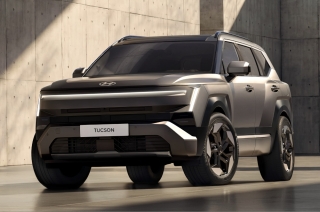
The all-new Hyundai Tucson gets two more powertrain options as it arrives in North America / News
Hyundai expands the new Tucson lineup with a PHEV, a naturally aspirated 2.0L engine, and a more rugged XRT Pro variant.

Popular Articles
-
Electric Vehicles in the Philippines for under P1 million
Jerome Tresvalles · Aug 19, 2025
-
VinFast: Are battery subscriptions the way forward?
Jerome Tresvalles · Nov 06, 2024
-
5 Tips to Maximize Fuel Efficiency
Jerome Tresvalles · Sep 09, 2024
-
Five driving habits that are draining your fuel tank
Jerome Tresvalles · Jun 24, 2025
-
2026 Changan Lumin Review
Jerome Tresvalles · Feb 05, 2026
-
Do electric cars even need maintenance?
Jerome Tresvalles · Oct 23, 2024
-
2025 JAECOO EJ-6 EV Review
Jerome Tresvalles · Oct 02, 2025
-
MG EVs: Electric performance without the luxury price tag
Shaynah Miranda · Jan 14, 2025
-
8 reasons the VinFast VF3 should be your first car
Dec 30, 2024
-
Hybrids explained: What’s the difference between mild, full, and plug-in hybrid cars?
Shaynah Miranda · Oct 15, 2024