


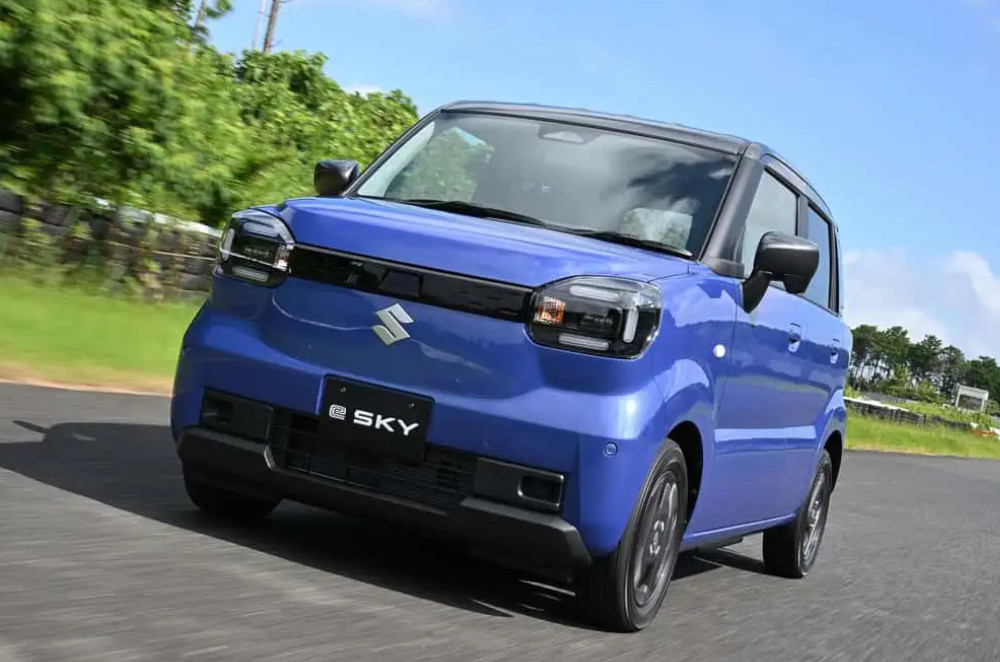
Suzuki is expanding its electric vehicle lineup in Japan with the production-ready e Sky, an all-electric kei car aimed at rivals such as the BYD Racco, Nissan Sakura, Mitsubishi eK X EV, and Honda N-One.
First shown as the Vision e-Sky Concept at the 2025 Japan Mobility Show, the e Sky has now made its official debut ahead of its planned Japanese market launch in Autumn 2026. Despite its compact dimensions, Suzuki claims the EV can travel up to 310 km on a full charge. The automaker has yet to release complete specifications, although reports indicate that the e Sky will use a 26 kWh lithium-iron phosphate battery paired with a single electric motor driving the front wheels. Suzuki has not disclosed the motor's output yet so we'll have to wait a bit before we see full performance figures. Not that the Suzuki e Sky is in any hurry to flex its power.
Charging times vary depending on the power source. Using a 6 kW AC wallbox, the e Sky can reportedly go from nearly empty to fully charged in around 4.5 hours. A 50 kW DC fast charger can bring the battery from 30 percent to 80 percent in approximately 25 minutes, while a standard household outlet takes about eight hours for a full charge. Suzuki has also equipped the EV with vehicle-to-home (V2H) and vehicle-to-load (V2L) functionality, with external devices able to draw up to 1,500 watts.
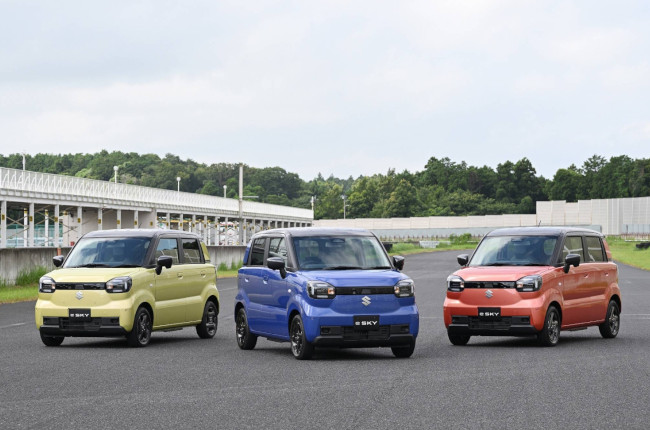
Design-wise, the e Sky doesn’t stray far from the Vision e-Sky Concept that previewed it, although Suzuki has toned down some of the concept's styling. Its front end features distinctive LED headlights, C-styled DRLs, along with matte black trim around the grille and bumper. The four-door layout and rear tailgate give it a practical edge, while LED taillights and a large rear window help with visibility.
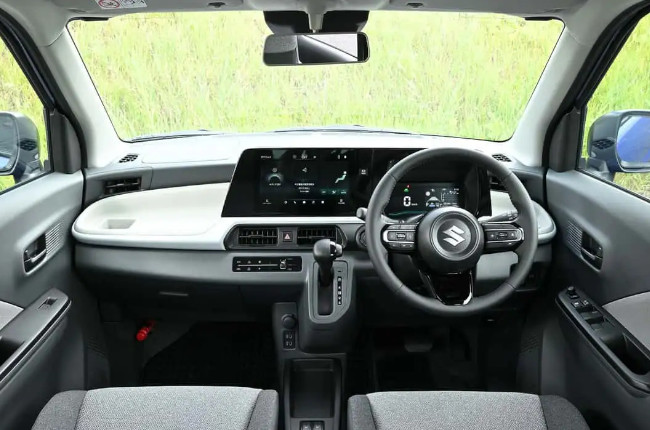
The e Sky measures 3,395 mm long, 1,475 mm wide, and 1,625 mm tall, with a 2,460-mm wheelbase. Inside, the compact EV can accommodate four occupants and makes use of its small footprint with a relatively spacious cabin. Equipment includes a 10.1-inch touchscreen infotainment system, a digital instrument cluster, a dedicated climate control panel, and a conventional gear selector mounted on the dashboard.
Despite its kei car proportions, Suzuki has packed the e Sky with several comfort features you’ll normally find in larger vehicles. These include a heated steering wheel, electronic parking brake, and a heat pump paired with an electric air heater designed to improve cabin warmth in colder conditions.
The Suzuki e Sky is scheduled to go on sale in Japan in Autumn 2026, with exports to markets including Europe and the UK expected to follow in 2027. Whether it will be headed to Southeast Asia is still uncertain. For now, you can check out Suzuki’s lineup on the AutoDeal Car Guide.
Latest News
-

OMODA & JAECOO strengthen Philippine aftersales support with Bosch Car Service partnership / News
OMODA & JAECOO owners can now access maintenance, repair, and warranty services via select Bosch Car Service outlets.
-
The all-new Hyundai Tucson gets two more powertrain options as it arrives in North America / News
Hyundai expands the new Tucson lineup with a PHEV, a naturally aspirated 2.0L engine, and a more rugged XRT Pro variant.
-
Geely Motor Philippines breaks 1,000-unit sales mark for the first time / News
Geely Motor Philippines posts a record 1,023 sales in September, led by strong demand for its electrified models.

Popular Articles
-
Electric Vehicles in the Philippines for under P1 million
Jerome Tresvalles · Aug 19, 2025
-
VinFast: Are battery subscriptions the way forward?
Jerome Tresvalles · Nov 06, 2024
-
5 Tips to Maximize Fuel Efficiency
Jerome Tresvalles · Sep 09, 2024
-
Five driving habits that are draining your fuel tank
Jerome Tresvalles · Jun 24, 2025
-
2026 Changan Lumin Review
Jerome Tresvalles · Feb 05, 2026
-
Do electric cars even need maintenance?
Jerome Tresvalles · Oct 23, 2024
-
2025 JAECOO EJ-6 EV Review
Jerome Tresvalles · Oct 02, 2025
-
MG EVs: Electric performance without the luxury price tag
Shaynah Miranda · Jan 14, 2025
-
8 reasons the VinFast VF3 should be your first car
Dec 30, 2024
-
Hybrids explained: What’s the difference between mild, full, and plug-in hybrid cars?
Shaynah Miranda · Oct 15, 2024