


Honda recently announced that it is pushing through with its development of hydrogen fuel cells, and has plans for a more extensive expansion into that field in the near future. Included in this endeavor is a fuel-cell electric vehicle based on the CR-V that it plans to release in 2024 for Japan and US.

Honda developed a new fuel cell system for the EV CR-V, built through a joint venture with American car giant, General Motors. Honda says that the fuel cell for the CR-V EV has one-third the cost and double the durability of the system fitted to the 2019 Honda Clarity Fuel Cell.

In addition to the new fuel cell system, Honda is also adding plug-in functionality to the CR-V. Allowing owners to charge their vehicles at home, addressing the valid concerns of the sparse, hydrogen refueling infrastructure, while also giving the vehicle flexibility in terms of power sources.

With Honda’s eyes firmly set on hydrogen technology, the brand will continue to develop its fuel cell. By 2030, Honda expects to develop a new fuel cell that is half the cost to produce and double the durability of the system that Honda and GM have made. Besides cars, Honda has also partnered with Dongfeng trucks to test the feasibility of using fuel cells for light-duty commercial vehicles. More recently, Isuzu and Honda are working together to test fuel cell applications for heavy-duty trucks in the construction industry, starting with excavators and wheel loaders.
Aside from testing where they can use fuel cells here on earth, Honda is taking it a step further and is planning on taking fuel cells to space. Helping them in developing the technology and achieving that goal is the Japan Aerospace Exploration Agency. Their plan is to harness solar energy to electrolyze water and create hydrogen. The fuel cell could then generate electricity and its water byproduct from hydrogen and oxygen. Honda refers to this as a "circulative renewable energy system."
The reason why Honda is working so hard to develop these systems is to ultimately achieve the goal of carbon neutrality by the year 2050. The company hopes that one day, its operations will have zero impact on the environment.
Latest News
-

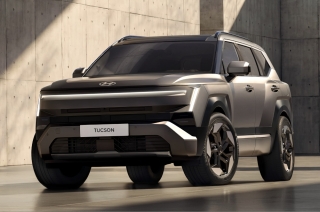
The all-new Hyundai Tucson gets two more powertrain options as it arrives in North America / News
Hyundai expands the new Tucson lineup with a PHEV, a naturally aspirated 2.0L engine, and a more rugged XRT Pro variant.
-
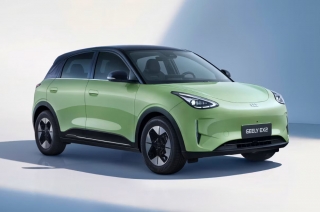
Geely Motor Philippines breaks 1,000-unit sales mark for the first time / News
Geely Motor Philippines posts a record 1,023 sales in September, led by strong demand for its electrified models.
-
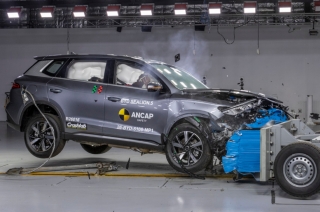
The Sealion 5 breaks BYD’s five-star ANCAP streak with a three-star rating / News
The BYD Sealion 5 becomes the brand’s first model to miss five stars from ANCAP under the organization’s latest safety rules.
Popular Articles
-
Electric Vehicles in the Philippines for under P1 million
Jerome Tresvalles · Aug 19, 2025
-
VinFast: Are battery subscriptions the way forward?
Jerome Tresvalles · Nov 06, 2024
-
5 Tips to Maximize Fuel Efficiency
Jerome Tresvalles · Sep 09, 2024
-
Five driving habits that are draining your fuel tank
Jerome Tresvalles · Jun 24, 2025
-
2026 Changan Lumin Review
Jerome Tresvalles · Feb 05, 2026
-
Do electric cars even need maintenance?
Jerome Tresvalles · Oct 23, 2024
-
2025 JAECOO EJ-6 EV Review
Jerome Tresvalles · Oct 02, 2025
-
MG EVs: Electric performance without the luxury price tag
Shaynah Miranda · Jan 14, 2025
-
8 reasons the VinFast VF3 should be your first car
Dec 30, 2024
-
Hybrids explained: What’s the difference between mild, full, and plug-in hybrid cars?
Shaynah Miranda · Oct 15, 2024