


In a report published by Nikkei Asian Review, vehicle sales in Southeast Asia climbed up to a record-breaking 6% in 2018. This is the third streak for the region, overtaking the record set in 2013. With all the new cars introduced in the region, the milestone isn’t that shocking, really.
It was an all-year positive performance which started out during the first half of 2018, where sales were recorded to be up by 4% on a year-to-date basis. Thailand led as the country with the highest increase with its 20% jump in sales. The country was able to secure 1.04 million sold units backed up by its robust economy. Car manufacturers in Thailand competed to provide the market with low-interest financing and other schemes.
Meanwhile, Southeast Asia’s top market Indonesia ended 2018 with sales growth of 7% to 1.15 million units sold. Collectively, Thailand, Indonesia, Malaysia, Philippines, Vietnam, and Singapore registered 3.57 million sales.
For automakers, 2018 was the year for the Southeast Asian region, after seeing a slowdown in the top two markets in the world, China and U.S. However, Nikkei reported that analysts predicted a slowdown in the Southeast Asian market this 2019 due to the effects caused by the U.S.-China trade war. In case you don’t know, the region relies heavily on China’s exports.
In line with analysts’ prediction, industry groups in Indonesia, Thailand, and Malaysia sees a flat turnover in 2019. They believe that demands in the region will suffer if exporter earnings slide down as Chinese economy slows down. On top of all these, there’s also the rising interest rate.
If 2018 turned out good for the region, Philippines suffered on its own. The year saw the harsh effects of the Tax Reform for Acceleration and Inclusion (TRAIN) law, which pulled down sales in the local market to a staggering 11% landslide in the first half, alone.
Historically, Southeast Asian automotive industry soared to around 3.5 million units sold in 2012 to 2013, thanks to the Thai government program that encouraged new-car purchase. But, the combined figure in the six countries fell to 3.12 million units in 2015. Subsequent sales recovery, on the other hand, was led by Philippines and Vietnam. Together, they make up a market of 700,000 units, which is bigger than the third-ranking Malaysia.
Photo courtesy of Bernard Spragg.
Latest News
-

Hyundai rolls out October deals with up to P700,000 in discounts / News
Hyundai Philippines rolls out October deals with savings of up to P700,000, plus fuel rebates and free one-year PMS.
-
OMODA & JAECOO strengthen Philippine aftersales support with Bosch Car Service partnership / News
OMODA & JAECOO owners can now access maintenance, repair, and warranty services via select Bosch Car Service outlets.
-
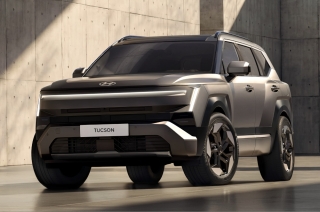
The all-new Hyundai Tucson gets two more powertrain options as it arrives in North America / News
Hyundai expands the new Tucson lineup with a PHEV, a naturally aspirated 2.0L engine, and a more rugged XRT Pro variant.


Popular Articles
-
Electric Vehicles in the Philippines for under P1 million
Jerome Tresvalles · Aug 19, 2025
-
VinFast: Are battery subscriptions the way forward?
Jerome Tresvalles · Nov 06, 2024
-
5 Tips to Maximize Fuel Efficiency
Jerome Tresvalles · Sep 09, 2024
-
Five driving habits that are draining your fuel tank
Jerome Tresvalles · Jun 24, 2025
-
2026 Changan Lumin Review
Jerome Tresvalles · Feb 05, 2026
-
Do electric cars even need maintenance?
Jerome Tresvalles · Oct 23, 2024
-
2025 JAECOO EJ-6 EV Review
Jerome Tresvalles · Oct 02, 2025
-
MG EVs: Electric performance without the luxury price tag
Shaynah Miranda · Jan 14, 2025
-
8 reasons the VinFast VF3 should be your first car
Dec 30, 2024
-
Hybrids explained: What’s the difference between mild, full, and plug-in hybrid cars?
Shaynah Miranda · Oct 15, 2024