



Your vehicle’s license plate and conduction stickers are two of the most displayed means of identifying your car. Straight from the dealership, a brand new car will already have a conduction number tied to it and will serve as a temporary form of identification for it prior to the vehicle being given its official plates. This then begs the question, can I remove my conduction sticker after I have gotten my official plates from the LTO?
What is a conduction sticker and what is its purpose?

Before we answer that let’s first cover what a license plate and conduction sticker do to help with the identification of your vehicle. A conduction sticker is a series of numbers and letters that are assigned to the carmakers which they will display on the vehicle. This is considered proof that the vehicle was properly procured in the Philippines from a recognized assembler, importer, or distributor. The sticker also legalizes the use of the vehicle before its initial registration to a person or entity. For this very reason, it can also be used as a temporary plate number for the car. It is important to note that car dealerships that are from a recognized importer, assembler, or distributor will be the ones in charge of the distribution of these stickers.
What is a license plate and what does it do?
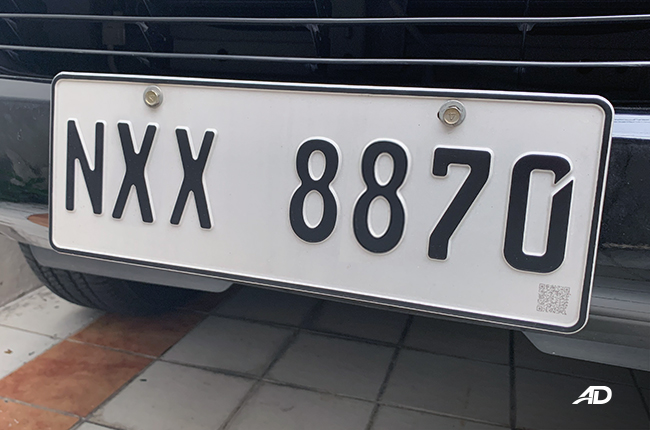
A license plate is a slim piece of reflectorized material that you put at the front of your vehicle. It contains numbers and letters that help identify the vehicle as your own. It also serves as proof that your car has been duly registered and has met the requirements and conditions for legal use set forth by the government to be used on public roads.

License plates are also used by the authorities in the Philippines to help identify vehicles especially if they are of a common type. These are often used as a means to assign certain violations to a car if there are any committed. License plates also serve the purpose of identifying a vehicle in the event that it gets stolen or lost. This is why without a license plate or conduction sticker, you cannot legally drive your vehicle in the Philippines.
Can I remove my conduction sticker after I have received my plates?
The simple answer to this is yes, you legally can, but if and only if you have already received the official license plates for your vehicle. However, we still recommend that you keep your conduction sticker on your vehicle as it can serve as an extra layer of protection if your vehicle gets stolen as it serves as an alternate way of identifying your vehicle aside from its license plates and registration. While license plates can be removed it is harder to cleanly remove a conduction sticker without leaving any residue. This can be a helpful thing to look out for if your vehicle gets stolen. If you notice that your conduction sticker is fading away or is already broken then you can remove it.
If, however, you still want to remove your conduction sticker from your vehicle after you have received your plates you can still choose to do it as these can fade over time. It's best to remove it with a heat gun or in combination with a sharp object like a knife and WD40 to make the process go even faster. If you don't have access to these tools then a sharp tool will still do the trick but make sure to remove the conduction carefully and gently to not damage the glass. If your conduction sticker has been on your vehicle for several years and is already deteriorating, the process will become even harder. What you can choose to do is just to keep it on instead or have a professional deal with it.
Latest Features
-

Why is it important to detail your car's windows? / Tips & Advice
It does pay to take proper care of your car’s windows.
-
Challenging expectations: Five reasons to consider the Chery Q EV / Featured Article
Think small EVs aren’t worth a second look? The Chery Q EV has the cabin and features that can convince you otherwise.
-
How to tell if your car’s CVT is failing? / Tips & Advice
Slipping, weird noises, or overheating? Your CVT may be asking for help. Here’s how to read the signs and act fast.

Popular Articles
-
Electric Vehicles in the Philippines for under P1 million
Jerome Tresvalles · Aug 19, 2025
-
VinFast: Are battery subscriptions the way forward?
Jerome Tresvalles · Nov 06, 2024
-
5 Tips to Maximize Fuel Efficiency
Jerome Tresvalles · Sep 09, 2024
-
Five driving habits that are draining your fuel tank
Jerome Tresvalles · Jun 24, 2025
-
2026 Changan Lumin Review
Jerome Tresvalles · Feb 05, 2026
-
Do electric cars even need maintenance?
Jerome Tresvalles · Oct 23, 2024
-
2025 JAECOO EJ-6 EV Review
Jerome Tresvalles · Oct 02, 2025
-
MG EVs: Electric performance without the luxury price tag
Shaynah Miranda · Jan 14, 2025
-
8 reasons the VinFast VF3 should be your first car
Dec 30, 2024
-
Hybrids explained: What’s the difference between mild, full, and plug-in hybrid cars?
Shaynah Miranda · Oct 15, 2024